Arabic.AI and HeyBreez Have Gone Live Inside Etisalat, and Gulf Arabic Voice Agents Just Became a Real Commercial Product
Arabic voice AI has moved from demo stage to production inside the biggest telco in the Gulf. On 22 April, UAE-headquartered...
Arabic.AI and HeyBreez Have Gone Live Inside Etisalat, and Gulf Arabic Voice Agents Just Became a Real Commercial Product
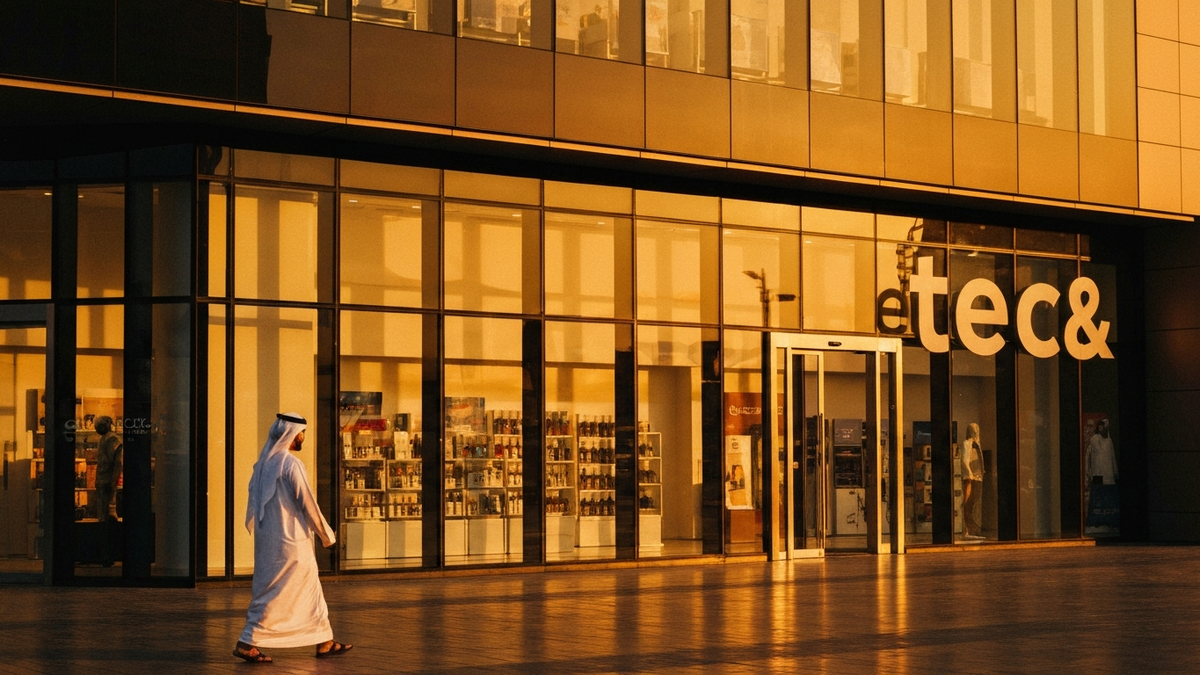
Arabic voice AI has moved from demo stage to production inside the biggest telco in the Gulf. On 22 April, UAE-headquartered Arabic.AI and real-time voice specialist HeyBreez confirmed the live deployment of their joint Arabic voice agent platform across e& (previously Etisalat) customer service operations in the UAE, with a staged rollout to Saudi Arabia's stc and Egypt's e& Egypt subsidiaries through Q3 2026. It is the first production Arabic voice agent running at telco scale in MENA, and the first deployment that combines native dialect coverage with sub-200 millisecond telephony latency.
The milestone follows the Arabic.AI-HeyBreez partnership announced earlier in April via Wamda, which had targeted Gulf enterprise and government buyers. With e& as anchor customer, that ambition now has a reference deployment that every other Gulf telco, bank, and government service can benchmark against.
What Gulf Users Hear When They Call
The live deployment covers the bulk of e&'s consumer inbound calls in the UAE. When a customer rings customer service for bill queries, roaming activation, number porting, or complex plan changes, they are now routed to the Arabic.AI voice agent by default. The agent handles the conversation in Emirati Arabic, switches to Modern Standard Arabic or Gulf Arabic if the customer prefers, and hands off to a human agent only when the case requires human judgement or policy override.
Advertisement
The experience is qualitatively different from the Arabic IVR menus Gulf consumers have lived with for 20 years. The agent understands open-ended queries, asks clarifying questions, reads back important information like spending caps, and executes the full change in real time against e&'s billing systems. Latency is the thing that makes or breaks a voice agent, and HeyBreez's infrastructure keeps round-trip response under 200 milliseconds, which is below the threshold where users start interrupting.
A voice agent that feels Arabic is very different from a voice agent that speaks Arabic. We have spent the last 18 months making sure the agent matches dialect, tone, and pacing the way a Gulf service professional would.
By The Numbers
200 m200 millisecond median response latency end-to-end, measured on Emirati voice traffic during the 30-day pilot.
44 Arabic dialect clusters supported: Gulf (including Saudi and Emirati), Levantine, Egyptian, and Maghrebi.
6363 percent of e&'s UAE consumer call volume now routed to the Arabic voice agent by default.
15 million15 million UAE consumers in the addressable base for this deployment alone.
400 million400 million Arabic speakers in the total addressable market for the Arabic.AI and HeyBreez partnership globally.
$12.8 billion$12.8 billion estimated 2026 global voice AI market size, according to Grand View Research.
The Architecture Mix Is Finally Competitive
The interesting part is how Arabic.AI and HeyBreez assembled the stack. The reasoning layer is built on TII's Falcon 3 family, specifically the H1R variant that has made Gulf enterprise inference economics meaningfully affordable. Speech recognition sits on fine-tuned Whisper models against a proprietary Gulf audio corpus.
Text-to-speech is a blend of ElevenLabs Arabic voices and a set of in-house voices trained for Emirati and Saudi pronunciation. The whole stack runs inside G42's UAE sovereign cloud footprint, which gives e& the data residency it needs to deploy against consumer calls.
We picked the best-in-class open components and we put Gulf engineering on top. Closed-source hyperscaler voice stacks still do not match the dialect nuance we deliver, and they cost twice as much to run at telephony scale.
This stack mix is significant for regional strategic reasons. It demonstrates that a competitive Gulf Arabic voice product can be built on open foundations with sovereign compute, with no hyperscaler dependency at the reasoning layer. That is what makes it defensible against Google Gemini or Microsoft Azure Speech, and it is a blueprint that other regional specialists will copy.
The Telco-Bank-Government Cascade
Voice agents start with telcos because telcos have the highest call volumes and the most direct economic pressure. From there, the cascade runs to banks and to government services. Arabic.AI and HeyBreez have already signalled their next three targets.
Customer
Sector
Country
Expected Go-Live
e& UAE (live)
Telco
UAE
22 April 2026
stc
Telco
Saudi Arabia
Q3 2026
e& Egypt
Telco
Egypt
Q3 2026
Emirates NBD
Banking
UAE
Q4 2026
Tamm (Abu Dhabi Government Services)
Government
UAE
Q4 2026
Qatar Financial Centre
Banking
Qatar
Early 2027
The banks are where the margin is. Retail banking call centres in the Gulf have notoriously high per-interaction costs, and a production Arabic voice agent that passes regulator review is a margin-improvement story. Emirates NBD has already piloted similar technology as part of its Silent Eight compliance stack, which suggests the ENBD move is on a faster internal track than usual.
Why This Crushes the Hyperscaler Default
Hyperscalers have spent two years pitching Arabic voice as part of a broader cloud contract. That bundling strategy worked when Arabic was a check-box capability, but it struggles once the buyer actually cares about dialect performance. Arabic.AI and HeyBreez have effectively unbundled voice, proved it at telco scale, and set a reference price that hyperscalers will find hard to match.
e& now has a production reference that it can show to any Gulf peer.
Arabic.AI can price voice at $0.04 per minute, roughly half the hyperscaler equivalent at equivalent latency and dialect accuracy.
HeyBreez monetises through infrastructure usage rather than software licences, which aligns with Gulf telco procurement preferences.
Specialist vendors can now genuinely compete with hyperscalers on Arabic-specific use cases.
Sovereign cloud deployment removes the regulatory blocker that bank and government buyers cite against hyperscaler voice services.
The AI in Arabia View: The e& deployment is the most important Arabic voice AI milestone of 2026, and it settles a big question in favour of specialist regional vendors over hyperscaler bundles. Arabic.AI and HeyBreez have shown that open-foundation models, Gulf audio data, and sovereign compute can match or beat hyperscaler voice services at a materially lower cost, and the telco cascade will push that pattern into banks and government services through 2026 and 2027. Our wider view is that Arabic AI is now breaking into genuine categories with genuine leaders, and voice has just named its leader. The next battles will be Arabic search, Arabic legal AI, and Arabic clinical documentation, and each of those categories is likely to follow the same pattern. Specialist regional vendors with Gulf data and sovereign compute will beat hyperscalers anywhere dialect nuance and regulatory comfort matter.
AI Terms in This Article6 terms
inference
When an AI model processes input and produces output. The actual 'thinking' step.
benchmark
A standardized test used to compare AI model performance.
end-to-end
Covering the entire process from start to finish.
best-in-class
Among the top performers in its category.
compute
The processing power needed to train and run AI models.
hyperscaler
A massive cloud computing provider like AWS, Azure, or Google Cloud.
Frequently Asked Questions
What does the Arabic.AI and HeyBreez deployment at e& actually do?
It replaces the traditional Arabic IVR with a voice agent that handles open-ended conversations, understands Emirati and Gulf Arabic, executes account changes against billing systems in real time, and hands off to human agents only for cases that require judgement. The agent now handles roughly 63 percent of e&'s UAE consumer call traffic.
What makes this different from Google or Microsoft Arabic voice?
Dialect nuance and telephony latency. Arabic.AI uses a Gulf audio corpus and in-house voice engineering to match dialect, tone, and pacing, while HeyBreez's infrastructure keeps latency under 200 milliseconds. Hyperscaler voice services treat Arabic as Modern Standard Arabic, lag on Gulf dialect accuracy, and are typically twice as expensive at telephony scale.
What models are underneath the hood?
TII's Falcon 3 H1R for the reasoning layer, fine-tuned Whisper for speech recognition, and a blend of ElevenLabs Arabic and in-house Emirati and Saudi voices for speech synthesis. The whole stack runs inside G42's sovereign UAE cloud zone to meet data residency requirements.
Which customers are next after e&?
Saudi Arabia's stc and Egypt's e& Egypt are targeted for Q3 2026. Emirates NBD and Abu Dhabi's Tamm government services are lined up for Q4, and Qatar Financial Centre is expected in early 2027.