
 ## How the capacity will actually be used
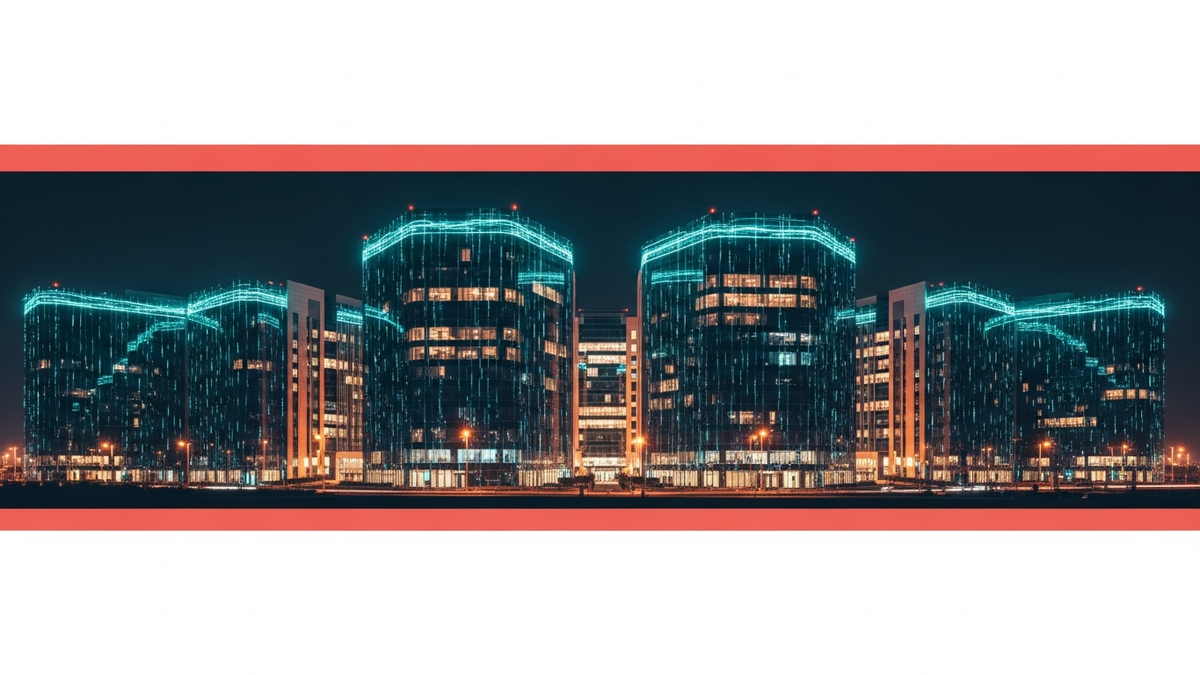
Microsoft has signalled that the chips will land in a mix of existing Abu Dhabi facilities and new campuses that pair traditional cooling with dry-air designs suited to the Gulf climate. Workloads will range from hosted **Azure AI Foundry** tenants to sovereign model training for Emirati public sector and defence customers. A slice of the supply is pencilled in for partners inside the **Stargate Abu Dhabi** programme, where OpenAI and G42 are co-developing research infrastructure that, in size, rivals proposed US sites.
> "Microsoft became the first company under the administration of President Donald Trump to receive export licences for advanced Nvidia processors to the UAE."
> — Reporting cited in e&'s Imagine& launch coverage, April 2026
> "The path we have taken in the UAE is not about importing hyperscale capacity for its own sake, it is about building sovereign AI on top of it."
> — Peng Xiao, Group Chief Executive, G42
## The winners, the watchers, and the wildcards
Inside the UAE, the immediate winners are clear. Microsoft gets first-mover rights on the Gulf's most ambitious AI hub, Nvidia locks in a multi-year supply path through Microsoft, and G42 gains the chip volume it needs to turn its three-year plan into reality. e& and du, the UAE's two telecom heavyweights, are likely to anchor hosted capacity for domestic customers, while Mubadala's portfolio of AI-adjacent assets, including **Presight** and **Bayanat**, gains a substantially deeper compute runway. The watchers sit in Riyadh, Doha, and Cairo, each weighing how fast a similar licence regime might extend to them.
The wildcards are political. A change in the US administration's priorities, a fresh flare-up of regional tensions, or any finding that re-exports have slipped outside approved channels could all trigger a licence review. That is one reason Microsoft is framing this as a sustained, decade-scale partnership, not a one-off transaction.
- Microsoft plus G42 anchor Abu Dhabi as the Gulf's primary AI compute hub.
- Nvidia secures a stable multi-year supply path to the UAE through an approved channel.
- e& and du gain capacity to host sovereign AI workloads for local enterprises.
- Saudi Arabia, Qatar, and Egypt accelerate US-facing security frameworks to shorten their own licence queue.
- Compliance teams at every Gulf hyperscaler re-tool for the strictest US export controls in a generation.
## A region re-ranking itself in real time
Over the last six months, the UAE has moved through a carefully staged series of wins: a national sovereign AI strategy, a headline Stargate announcement, fresh chip approvals, and now an explicit Microsoft anchor. Our recent coverage of [UAE's AI and robotics strategy targeting a 30% share of the global AI and robotics market by 2040](/news/uae-ai-robotics-strategy-30-percent-global-market-2040) shows how quickly ambition has turned into infrastructure, while [Saudi Arabia's HumAIn Marketplace](/news/humain-one-ai-agent-marketplace-saudi-arabia) and [Morocco's Nexus AI Factory at GITEX Africa 2026](/news/morocco-nexus-ai-factory-gitex-africa-2026) show neighbours sprinting to keep pace. On the enterprise side, deals such as the [Salesforce Agentforce and Slack rollout for UAE enterprises](/business/salesforce-agentforce-slack-uae-enterprise-ai) and the wider [GCC enterprise AI ROI picture](/business/gcc-enterprise-ai-roi-2026-lenovo-idc-playbook) hint at where all this compute is supposed to land.
| Entity | Role in the licence | Near-term stake |
|---|---|---|
| Microsoft | Licence holder, capacity operator | Azure AI Foundry in the UAE |
| Nvidia | Chip supplier under approved path | 500,000 units a year through 2027 |
| G42 | UAE sovereign AI champion | Stargate Abu Dhabi, enterprise AI |
| e& and du | Telco hosts | Sovereign hosted AI for domestic customers |
| Mubadala | Strategic owner | Presight, Bayanat, portfolio compute |
## How the capacity will actually be used
Microsoft has signalled that the chips will land in a mix of existing Abu Dhabi facilities and new campuses that pair traditional cooling with dry-air designs suited to the Gulf climate. Workloads will range from hosted **Azure AI Foundry** tenants to sovereign model training for Emirati public sector and defence customers. A slice of the supply is pencilled in for partners inside the **Stargate Abu Dhabi** programme, where OpenAI and G42 are co-developing research infrastructure that, in size, rivals proposed US sites.
> "Microsoft became the first company under the administration of President Donald Trump to receive export licences for advanced Nvidia processors to the UAE."
> — Reporting cited in e&'s Imagine& launch coverage, April 2026
> "The path we have taken in the UAE is not about importing hyperscale capacity for its own sake, it is about building sovereign AI on top of it."
> — Peng Xiao, Group Chief Executive, G42
## The winners, the watchers, and the wildcards
Inside the UAE, the immediate winners are clear. Microsoft gets first-mover rights on the Gulf's most ambitious AI hub, Nvidia locks in a multi-year supply path through Microsoft, and G42 gains the chip volume it needs to turn its three-year plan into reality. e& and du, the UAE's two telecom heavyweights, are likely to anchor hosted capacity for domestic customers, while Mubadala's portfolio of AI-adjacent assets, including **Presight** and **Bayanat**, gains a substantially deeper compute runway. The watchers sit in Riyadh, Doha, and Cairo, each weighing how fast a similar licence regime might extend to them.
The wildcards are political. A change in the US administration's priorities, a fresh flare-up of regional tensions, or any finding that re-exports have slipped outside approved channels could all trigger a licence review. That is one reason Microsoft is framing this as a sustained, decade-scale partnership, not a one-off transaction.
- Microsoft plus G42 anchor Abu Dhabi as the Gulf's primary AI compute hub.
- Nvidia secures a stable multi-year supply path to the UAE through an approved channel.
- e& and du gain capacity to host sovereign AI workloads for local enterprises.
- Saudi Arabia, Qatar, and Egypt accelerate US-facing security frameworks to shorten their own licence queue.
- Compliance teams at every Gulf hyperscaler re-tool for the strictest US export controls in a generation.
## A region re-ranking itself in real time
Over the last six months, the UAE has moved through a carefully staged series of wins: a national sovereign AI strategy, a headline Stargate announcement, fresh chip approvals, and now an explicit Microsoft anchor. Our recent coverage of [UAE's AI and robotics strategy targeting a 30% share of the global AI and robotics market by 2040](/news/uae-ai-robotics-strategy-30-percent-global-market-2040) shows how quickly ambition has turned into infrastructure, while [Saudi Arabia's HumAIn Marketplace](/news/humain-one-ai-agent-marketplace-saudi-arabia) and [Morocco's Nexus AI Factory at GITEX Africa 2026](/news/morocco-nexus-ai-factory-gitex-africa-2026) show neighbours sprinting to keep pace. On the enterprise side, deals such as the [Salesforce Agentforce and Slack rollout for UAE enterprises](/business/salesforce-agentforce-slack-uae-enterprise-ai) and the wider [GCC enterprise AI ROI picture](/business/gcc-enterprise-ai-roi-2026-lenovo-idc-playbook) hint at where all this compute is supposed to land.
| Entity | Role in the licence | Near-term stake |
|---|---|---|
| Microsoft | Licence holder, capacity operator | Azure AI Foundry in the UAE |
| Nvidia | Chip supplier under approved path | 500,000 units a year through 2027 |
| G42 | UAE sovereign AI champion | Stargate Abu Dhabi, enterprise AI |
| e& and du | Telco hosts | Sovereign hosted AI for domestic customers |
| Mubadala | Strategic owner | Presight, Bayanat, portfolio compute |
The AI in Arabia View: This is the moment the UAE stops asking for an AI seat and starts setting the table. Half a million advanced Nvidia chips a year, anchored by Microsoft and operationalised by G42, is a planning horizon the rest of the region cannot match on paper. The real test is not the hardware, it is the governance. If Abu Dhabi can show that 500,000 chips a year can be audited, secured, and kept out of sanctioned hands, the case for a similar licence in Riyadh, Doha, and Cairo writes itself. If it slips, the reset will be brutal, and shared across the Gulf.
## Frequently Asked Questions
### What exactly did Microsoft receive?
Microsoft received a US export licence authorising it to ship up to 500,000 advanced Nvidia processors a year to the UAE through 2027. The licence covers chips used for AI training and inference and sits on top of a separate $15bn Microsoft commitment to UAE infrastructure, research, and workforce programmes over the decade.
### Who else benefits inside the UAE?
The primary UAE beneficiaries are **G42**, which anchors the Stargate Abu Dhabi AI build, plus **e&** and **du** as hosted capacity partners. **Presight** and **Bayanat**, both in the Mubadala AI portfolio, will also gain headroom for sovereign workloads, as will MBZUAI-adjacent research programmes.
### How does this change the chip picture for Saudi Arabia and Qatar?
It raises the bar. Riyadh and Doha will now have to show similar security, end-use, and re-export controls to get comparable licences. Expect accelerated engagement with US officials, tighter compliance at **HumAIn**, **PIF**-backed AI vehicles, and **QatarEnergy** data-centre plans, and a new wave of Gulf-US AI governance talks.
### Could the licence still be pulled back?
Yes. Licences can be reviewed, narrowed, or revoked if Washington finds evidence of re-export, sanctions breaches, or governance failures. That is why Microsoft, Nvidia, and G42 are all framing this as a long-horizon partnership built on transparency rather than a one-off supply deal.
Does the UAE's new chip ceiling settle the Gulf AI race, or does it just move the starting line to Riyadh and Doha? Drop your take in the comments below.