## Morocco's $1.28 Billion AI Factory: How Nexus Core Systems Beat South Africa to Africa's Biggest Sovereign AI Deal
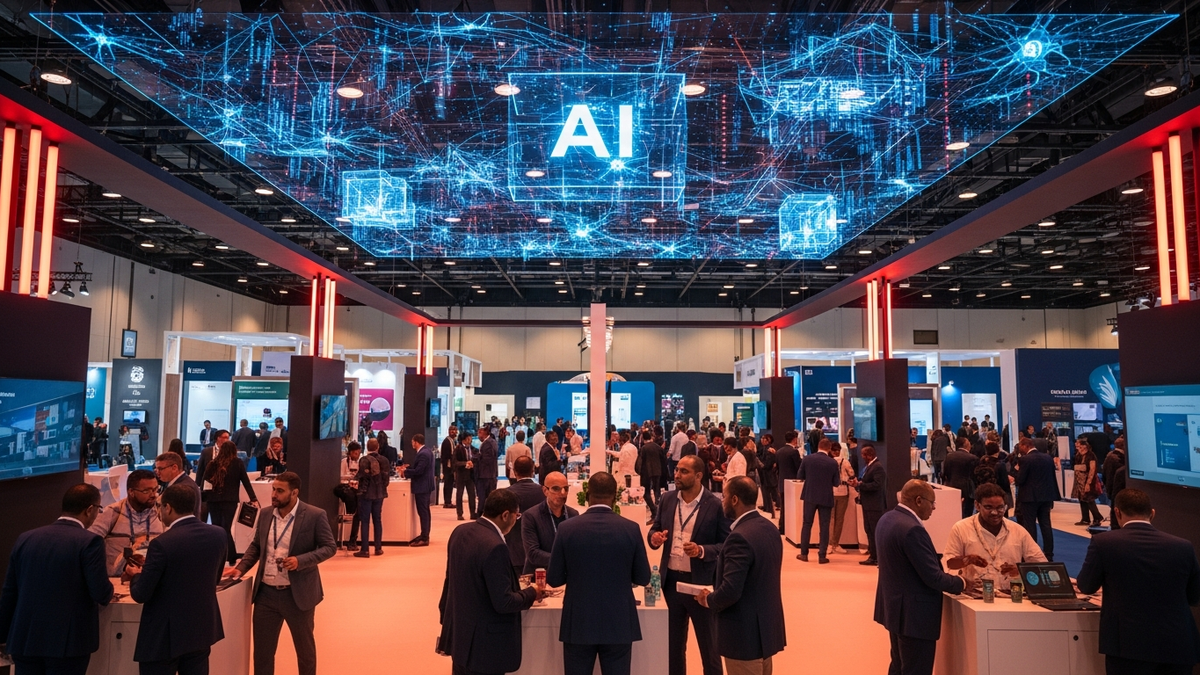
At **GITEX Africa 2026** in Marrakech, which ran from 7 to 9 April with over 1,450 exhibitors from 130 countries, Morocco announced the most consequential AI infrastructure deal in African history. The **Nexus AI Factory Platform**, a joint project between **Nexus Core Systems** and the Moroccan government, carries a total investment of **$1.28 billion** and positions the Kingdom as Africa's first sovereign AI infrastructure provider.
The deal did not happen quietly. According to sources familiar with the competitive process, Morocco outbid **South Africa**, which had been considered the frontrunner for a major African AI data centre deal given its more mature existing digital infrastructure. Morocco's competitive advantages were a combination of its **Digital 2030 strategy**, its government's willingness to move quickly, and critically, the alignment with **Nvidia** and **Naver Cloud** as technology partners that gave the bid credibility with international compute providers.
## The Structure of the Deal
The Nexus AI Factory is phased over two main stages:
**Phase 1** commits **5 billion Moroccan dirhams** (approximately $500 million) to a **16 MW high-performance computing data centre** in **Nouaceur**, near Casablanca. The site also includes a Centre of Excellence for AI training and an innovation hub. Land acquisition for Phase 1 has already been completed. The timeline targets 125 direct jobs by 2027.
**Phase 2** adds a further **7 billion dirhams** for a **20 MW expansion** at a separate site, bringing the combined infrastructure to **36 MW** total capacity. This expansion is expected to follow Phase 1's completion, with the full platform representing one of the largest AI compute facilities on the African continent.
The partnership structure involves three Moroccan government entities: the **Ministry of Digital Transition and Administrative Reform**, the **Ministry of Investment**, and the **Moroccan Agency for Investment and Export Development**. The combination of digital policy, investment facilitation, and trade promotion agencies as co-signatories signals that the Moroccan government views this as a strategic economic development asset, not merely a technology procurement.
### By The Numbers
- **$1.28 billion**: Total investment in the Nexus AI Factory Platform across both phases
- **12 billion dirhams**: Dirham-denominated total, reflecting Morocco's ambition to finance part of the project domestically
- **36 MW**: Combined data centre capacity across Phase 1 and Phase 2 sites
- **125**: Direct jobs targeted by 2027 from Phase 1 alone
- **$350 billion**: Total assets under management represented by the 400+ investors attending GITEX Africa 2026
- **5%**: Morocco's Digital 2030 target for the digital economy's share of GDP
## Why Morocco Beat South Africa
The competitive outcome surprises some analysts who had expected South Africa, with its more developed existing cloud infrastructure and larger domestic enterprise market, to win the flagship African sovereign AI data centre deal.
The factors that tipped the balance towards Morocco are instructive. First, **regulatory and investment climate speed**: Morocco's investment agency processed the necessary approvals for land acquisition in Nouaceur before the competing bids could do comparable preparation. In large infrastructure transactions, the ability to demonstrate near-term buildability is often decisive.
Second, **GITEX alignment**: Morocco's hosting of GITEX Africa 2026 gave the Kingdom a home-ground diplomatic advantage for closing the deal publicly at maximum visibility, under King Mohammed VI's patronage.
Third, **Nvidia and Naver Cloud partnerships**: Morocco secured partnerships with two globally credible technology providers before the announcement, which addressed the most obvious question any sophisticated investor would ask about a 36 MW AI compute facility: who is supplying the GPUs and the software stack?
> "Morocco's investment climate and talent base made this the clear choice. We are building something here that Africa has not seen before."
> — Jaap Zuiderveld, CEO, Nexus Core Systems, GITEX Africa 2026, Marrakech
## Strategic Significance for the Maghreb and Africa
The Nexus AI Factory is not just a data centre. It is a statement about where AI infrastructure power in Africa will be concentrated, and it has implications that extend well beyond Morocco's borders.
**For the Maghreb**, it creates a credible regional AI compute hub that Tunisia, Algeria, and Libya can access rather than routing through European or Gulf facilities. The Nouaceur location, near Casablanca's Mohammed V International Airport, is optimally positioned for connectivity to both Sub-Saharan Africa and European markets.
**For Sub-Saharan Africa**, it creates a potential stepping stone for AI deployment that avoids the latency and cost issues of routing through European cloud providers. **Francophone Africa** in particular, which shares Morocco's French administrative heritage, is a natural initial market for AI services built on the Nexus platform.
**For the MENA region**, Morocco's deal changes the competitive calculus for AI infrastructure investment across the Arab world. The UAE and Saudi Arabia have been the unquestioned leaders in MENA AI infrastructure investment, but Morocco's $1.28 billion commitment, combined with its positioning as a bridge between Africa and the Arab world, introduces a meaningful new player into regional AI infrastructure competition.
| Country | Major AI Infrastructure Project | Investment | Status (April 2026) |
|---|
| UAE | Stargate UAE (Abu Dhabi) | Multi-billion | 200 MW cluster on track Q3 2026 |
| Saudi Arabia | HUMAIN GPU network | Multi-billion | 600,000 GPU buildout active |
| Morocco | Nexus AI Factory (Nouaceur) | $1.28 billion | Phase 1 land acquired |
| Egypt | Karnak LLM + cloud investment | $42 billion target | Strategy phase |
| Qatar | QCAI research + cloud | Undisclosed | Active |
## Morocco's Digital 2030 Ambition
The Nexus deal fits within Morocco's broader **Digital 2030 strategy**, which targets a 5% contribution from the digital economy to GDP, 270,000 digital sector jobs, and 3,000 tech startups. The country has been investing heavily in digital infrastructure and connectivity, and its educated, French-Arabic bilingual workforce gives it a talent advantage for AI development that neither requires Anglophone dominance nor the significant Arabic-English code-switching that characterises Gulf tech environments.
**Darija**, Morocco's Arabic dialect, is one of the most spoken Arabic varieties in the world by population, and the lack of Darija NLP capability in existing Arabic AI systems is a genuine market gap. The [ArabicDialectHub resource](/arabic-ai/arabic-nlp-2026-community-research-mena) released at AbjadNLP 2026 in Rabat, which includes Moroccan Darija alongside Gulf Arabic varieties, is a signal that the research community is beginning to address this gap. The Nexus AI Factory, if it develops an AI Centre of Excellence with genuine research capacity, could accelerate Darija AI development significantly.
The AI in Arabia View: Morocco has played its GITEX hosting advantage exceptionally well. Closing Africa's biggest sovereign AI infrastructure deal at your own home conference, with royal patronage, in front of 400 investors managing $350 billion, is not accidental. The Nexus AI Factory deal changes the MENA AI infrastructure map: for the first time, a Maghreb country has committed sovereign AI compute investment at a scale that demands to be taken seriously alongside Gulf projects. Morocco's next challenge is execution, turning a signed MoU and acquired land into operational compute capacity that delivers the $350 billion investor ecosystem a reason to route African AI workloads through Casablanca rather than Dubai or Riyadh.
## Frequently Asked Questions
### What is the Nexus AI Factory Platform?
The Nexus AI Factory Platform is a $1.28 billion sovereign AI infrastructure project in Morocco, comprising two data centre sites with combined capacity of 36 MW. Phase 1, a 16 MW facility in Nouaceur near Casablanca, has completed land acquisition. It is backed by Nvidia and Naver Cloud technologies.
### Why did Morocco win the deal over South Africa?
Morocco's competitive advantages included faster regulatory processing that completed land acquisition ahead of the competition, the GITEX Africa 2026 home conference advantage, and pre-secured partnerships with Nvidia and Naver Cloud that gave the bid technical credibility.
### What is GITEX Africa?
GITEX Africa is a major technology exhibition and investment conference. The 2026 edition was held in Marrakech, Morocco, hosting 1,450 exhibitors from 130 countries and 400 investors managing $350 billion in assets, under the patronage of King Mohammed VI.
### How does the Nexus AI Factory fit Morocco's Digital 2030 strategy?
Morocco's Digital 2030 strategy targets a 5% digital economy GDP share, 270,000 digital sector jobs, and 3,000 startups. The AI Factory provides the sovereign compute infrastructure that underpins those targets, enabling AI product development within Morocco rather than dependence on foreign cloud providers.
### What does this deal mean for African AI development?
The Nexus AI Factory creates Africa's first sovereign AI infrastructure platform at meaningful scale, offering data residency, low-latency compute access, and a Centre of Excellence for training that reduces African AI developers' dependence on European and US cloud infrastructure.
Morocco's $1.28 billion AI infrastructure commitment is the most significant development in Maghreb tech policy in a decade, and it deserves attention from anyone watching where the next generation of MENA and African AI capability will be built. The race to become Africa's AI capital has a new frontrunner. Drop your take in the comments below.
