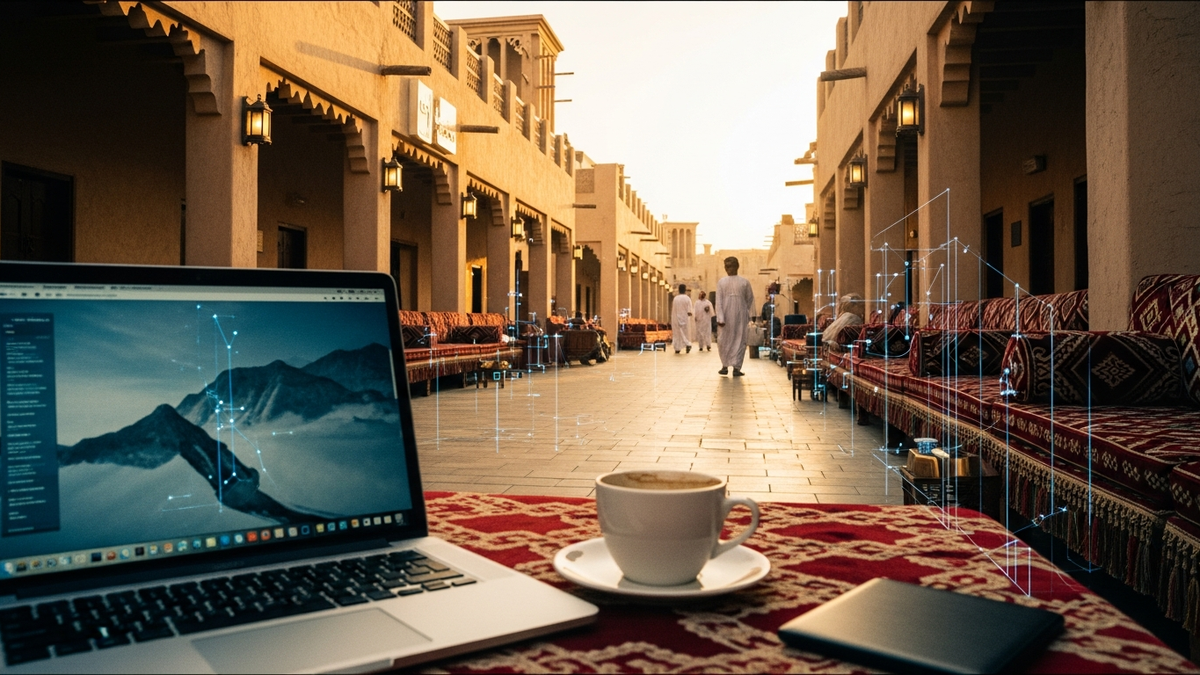
Abu Dhabi has positioned itself at the forefront of AI-driven energy innovation in the MENA region.
Abu Dhabi Leads AI Charge in MENA Energy with Solar Park Optimisation and Emissions Cuts
Abu Dhabi has positioned itself at the forefront of AI-driven energy innovation in the MENA region. Advanced AI tools now manage the full lifecycle of energy assets, from design to emissions control. This shift supports the UAE's low-carbon goals while boosting efficiency in oil, gas, and renewables. The focus falls on flagship projects like the Mohammed bin Rashid Al Maktoum Solar Park.
AI Reshapes UAE Energy Operations
ADNOC continues to pioneer AI applications, building on its recent $500 million value gains in oil optimisation as detailed in aiinarabia.com coverage. Yet Abu Dhabi now extends this to renewables. AI handles front-end design, predictive maintenance, and emissions optimisation across assets. This creates a self-reliant industrial model suited to global demands.
The Mohammed bin Rashid Al Maktoum Solar Park deploys AI for real-time performance monitoring. Predictive analytics forecast output from solar PV and CSP systems. Load balancing prevents grid overloads during peak sun hours. These steps align with the UAE Energy Strategy 2050, which targets 50% clean energy by 2050.
Advertisement
Smart grids in Abu Dhabi and Dubai integrate AI for demand forecasting. Energy efficiency rises as systems predict consumption patterns. This reduces waste in petrochemical processing too. Operators cut downtime by 20% through AI alerts on equipment faults.
AI and automation are being embedded across the full lifecycle of energy assets, driving the emergence of a more agile, self-reliant industrial model.
Saudi Arabia and UAE Compete in AI Renewables Race
Saudi Arabia matches UAE efforts under Vision 2030. Aramco tests AI for grid reliability and renewable integration. Yet the UAE holds the edge in 2024 market share per Grand View Research. The Middle East AI in energy market hit $54.48 million last year, with a 22.24% CAGR to 2033.
Qatar advances at the 800 MW Al Kharsaah Solar PV Plant. AI optimises performance and dispatch there. Hydrogen production explores AI-driven carbon capture. Still, Abu Dhabi's scale sets the pace.
Challenges persist. Data scarcity hampers models in MENA utilities. AI training guzzles power, potentially hitting 0.5% of global electricity by 2027. UAE counters with green data centres powered by renewables.
Country
Key AI Energy Initiative
Projected Impact
UAE
Mohammed bin Rashid Solar Park AI monitoring
30% better solar forecasting accuracy
Saudi Arabia
Vision 2030 grid AI deployments
$374.42 million market by 2033
Qatar
Al Kharsaah PV optimisation
Enhanced hydrogen and CCS efficiency
Egypt
Smart microgrids in solar parks
Improved renewable integration
Petrochemicals Gain from AI Sustainability Push
AI enters UAE petrochemicals via emissions tracking. Masdar integrates models for low-carbon processing. This links to ADNOC's upstream AI deal worth $1.2 billion, now including Iraq as per aiinarabia.com report.
Predictive maintenance slashes outages in refineries. AI analyses sensor data for fault detection. Sustainability improves as models optimise fuel use. Abu Dhabi targets net zero by 2045.
Faster design cycles for new plants.
15-25% emissions reductions via optimised operations.
Integration with MBZUAI research for custom models.
The UAE holds a significant share of Middle East AI in the energy market in 2024, driven by its advanced renewable infrastructure.
Regional cooperation grows. UAE shares AI tools with Oman and Bahrain. Joint labs develop Arabic-language energy models. This counters data gaps.
Water and Power Demands Test AI Growth
AI data centres strain resources. UAE plans renewable-powered facilities. G42 leads with efficient clusters. Saudi's PIF funds similar via HUMAIN, echoing recent $501 million MIS deal in aiinarabia.com news.
By 2030, UAE AI may need 61 billion litres of water annually. Solutions pair desalination with solar. Energy security drives renewables surge, per Gulf Business insights.
Company
Country
AI Use Case
ADNOC
UAE
Reservoir simulation, drilling optimisation
Aramco
Saudi Arabia
Predictive maintenance, downstream
QatarEnergy
Qatar
LNG logistics, emissions tracking
Kuwait Petroleum
Kuwait
Refinery yield, safety
PetroRabigh
Saudi Arabia
Petrochemical process AI
Regional context
The MENA AI market is compounding at a pace that few advanced-economy benchmarks now match. IDC forecasts the region will cross $15 billion in AI spend in 2026, up from $8.7 billion in 2024, and PwC projects a $320 billion contribution to Gulf GDP from AI by 2030. Sovereign capital is the dominant funder, with PIF, Mubadala, and the Qatar Investment Authority all disclosing increased AI allocations over the last six months. Against that backdrop, the UAE story we cover here sits inside a broader pattern: Gulf governments and their partners in Cairo, Rabat, and Amman are translating national strategies into procurement, and the procurement decisions are starting to favour Arabic-first vendors who can show production deployments rather than demos.
The AI in Arabia View: Abu Dhabi's AI energy push marks a pivotal step for MENA diversification. By mastering solar optimisation and emissions AI, the UAE not only cuts oil reliance but sets a template for neighbours. Saudi Vision 2030 follows closely, yet UAE's market lead and projects like Mohammed bin Rashid give it first-mover advantage. Success hinges on green AI: renewable data centres and transparent models build trust. This positions MENA as green tech exporter, turning sun and smarts into strategic assets amid global decarbonisation. Riyadh and Doha must accelerate to match.
Primarily guided or operated by artificial intelligence.
first-mover advantage
The benefit of being the first to enter a market.
Frequently Asked Questions
How does AI improve solar energy in the UAE?
AI at sites like the Mohammed bin Rashid Al Maktoum Solar Park delivers real-time monitoring and 30% more accurate forecasting. Predictive maintenance cuts downtime. This supports UAE Energy Strategy 2050's clean energy targets while stabilising grids against variable output.
What is the projected growth of AI in MENA energy?
The market stood at $54.48 million in 2024, set to hit $374.42 million by 2033 with 22.24% CAGR. UAE leads via renewables and smart grids. Saudi Arabia and Qatar invest heavily in similar tech for diversification.
What challenges face AI adoption in MENA energy?
Data scarcity, high power use, and regulatory gaps slow progress. AI may consume 0.5% global electricity by 2027. UAE addresses this with green data centres and IoT sensors for better inputs.
How does AI aid petrochemical sustainability?
In UAE facilities, AI optimises emissions and fuel use for 15-25% reductions. It predicts faults to minimise outages. Ties to ADNOC's $500 million oil AI gains extend to low-carbon processing.
Which countries lead MENA AI energy efforts?
UAE tops with Abu Dhabi initiatives, followed by Saudi Arabia's Vision 2030 deployments. Qatar advances at Al Kharsaah. Egypt builds microgrids. Regional pilots in Morocco and Oman gain traction.